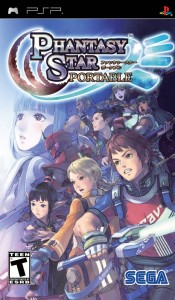
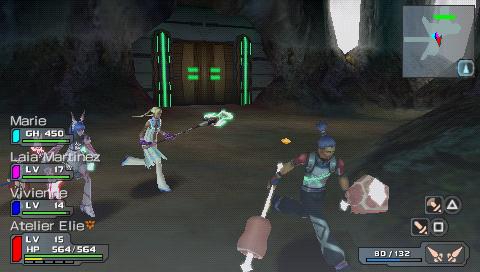
NOOOOO! This can’t be happening! I just killed the final boss of Phantasy Star Portable. It was a hard fought battle, my teammates died like flies and I completely ran out of healing items near the end, but I did it. I did it! I was so proud of myself I thought, “This deserves a screenshot!” And so I tried to take a picture of the boss in its dying throes… and of course the PSP froze… I know, I was totally asking for it, but it still hurts. I wonder if my save data is okay.
I think I’m beginning to understand the appeal of action RPGs, though. Turn-based RPGs can be challenging in their own way, but there’s something extra satisfying about running and dodging and hiding and putting the finishing touches on the boss through your own skill. It might be just a Phantasy Star Portable thing, but winning that last battle felt sooooooo good. I think I’m going to try it again and pass on the screenshot next time. Won’t it be funny if the first time was a fluke and now I can’t beat the boss any more? (hint: no, no it won’t be funny)
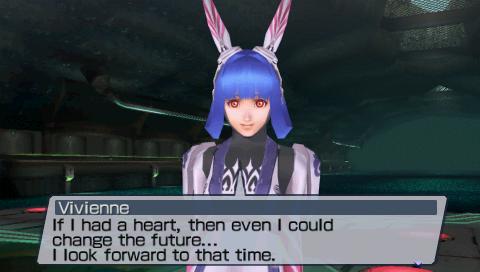
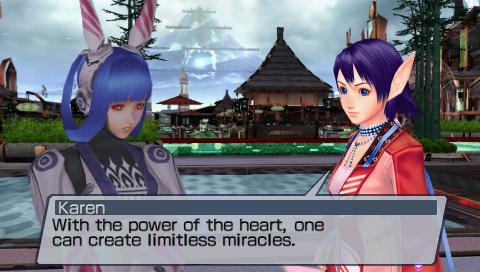
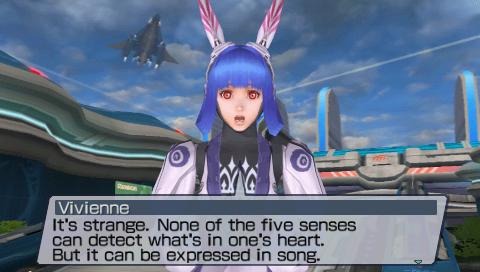
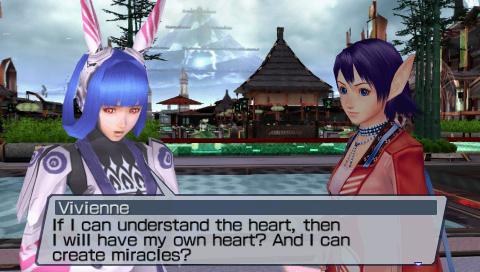
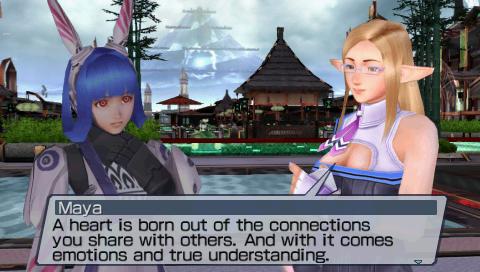
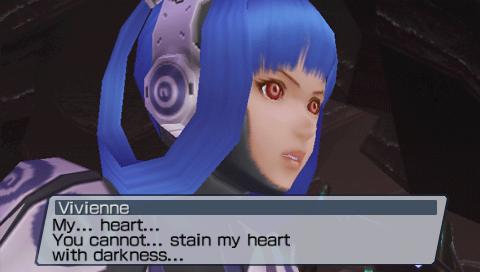
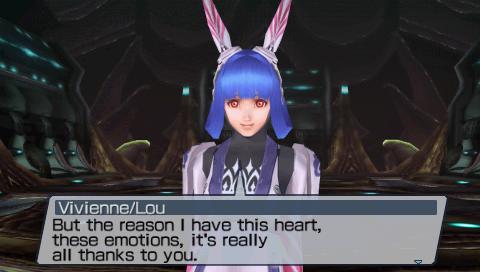
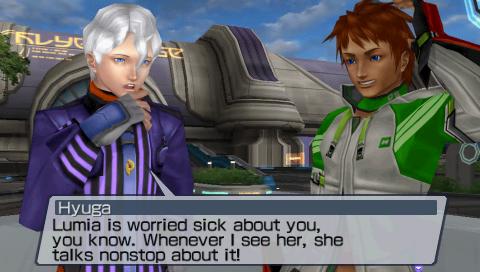
I’ll leave you with this summary of 75% of the dialog in this game: my partner KOS-MOS Vivienne and her friends waffling on and on about hearts like a bunch of Care Bears:
 |
 |
 |
 |
 |
 |
 |
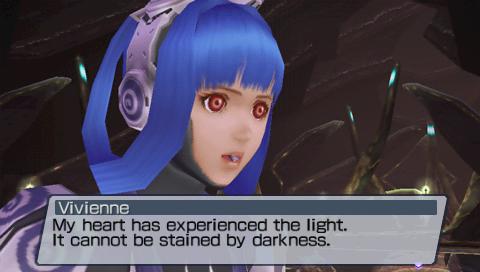 |
I can’t help thinking the game would have been 10 times better if they’d stopped trying to shoehorn moral lessons in there and just let me enjoy wasting monsters. Not every game has to be “inspirational” or “uplifting” you know.
Now then, I seem to have gotten my second wind. Time to see if I can put paid to the boss for the second time before I sleep. Hopefully the euphoria will have worn off by the time I wake up, and I’ll be able to write a more objective post about this game. I worry I may have inadvertently given the impression that it is good, or even interesting, when the reason I like is precisely because it’s so bland. For now, less talking, more boss-killing!
 , so they throw around terms and make reference to events and characters like I should know them all already. Instead of explaining thing properly, the game just expects me to be familiar with the Gurhal system, the species/races in the system and their mutual relations, whatever SEED are, whoever the Alliance Military are, whoever Captain Curtz is, and so on and so forth. And they have these “emotional” scenes and stuff, featuring people I’ve never even seen before. I feel bad telling them I don’t care, but… I DON’T CARE!!!